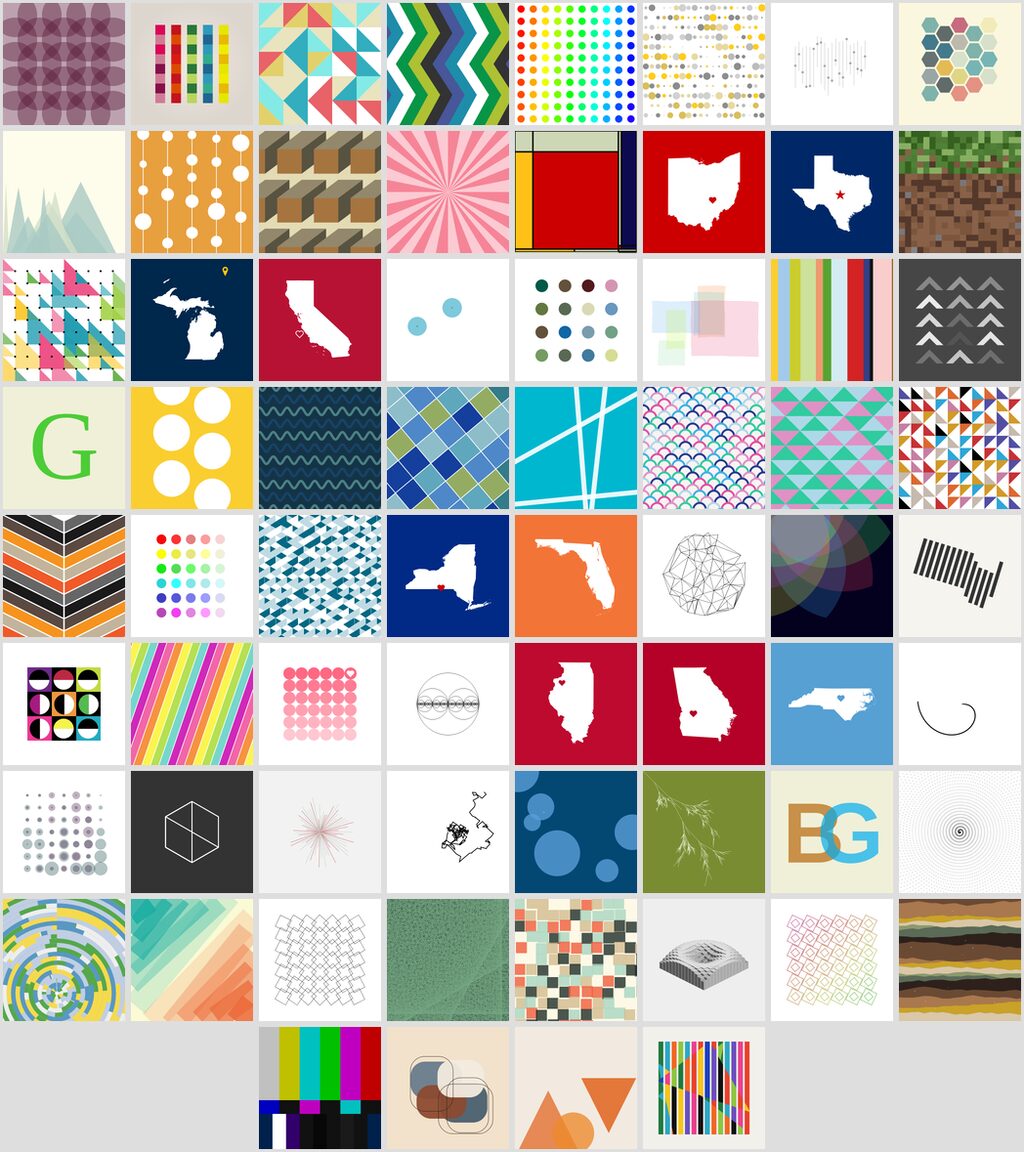
We believe logos should visually represent its parent company: its values, philopsophy, and what sets it apart.
Did you notice anything different about our logo? It’s unique! Every time you visit a page, a new variant of our logo is generated.
Its actually one of the first pieces I wrote, and its source code is pretty straightforward:
var w = width / 3;

for (var x = 0; x < 3; x++) {
  for (var y = 0; y < 3; y++) {
    s.rect(x * w, y * w, w, w)
      .attr({
        fill: "#000",
        fillOpacity: Math.random()
      });
  }
}
Nine squares, each one a random shade of gray. I tried a few marks that were more clever than that and threw them all away.
The logo on the site works the same way. It isn’t an image file sitting on a server, it’s drawn by your browser when the page loads, so you get a new one on every page you visit.
The favicon changes too. It’s the same nine squares, so the icon in your browser tab is different every time you come back. At that size it’s just a few gray blocks, but they’re never the same few.
A logo that changes isn’t much of a logo, I know. You’re supposed to pick one and stick with it. But a fixed mark on a site about generative art felt like a lie, so this is what we have instead.
variart has been quiet for a long time. Years, really. The site kept running and every piece kept drawing itself for anyone who stopped by, but I stopped adding to it.
I want to keep that up. The plan is a new piece every two days.
I’m also going back through the old ones, because some of them aren’t as generative as I remember. Cubular is the worst offender. I wrote it in 2014 and never noticed that every variant came out identical––the same blue stack of cubes, every time you clicked.
It has a palette of its own now, and two sliders: how big the cubes are, and how far the stack falls apart. Leave the second one at zero and you get the stack I drew twelve years ago. Turn it up and the light starts coming from every direction at once, until the cubes stop reading as cubes at all.
More of that to come. In the meantime, click a piece to get a variant nobody has seen before, and read the source code while you’re there––it’s on every page.
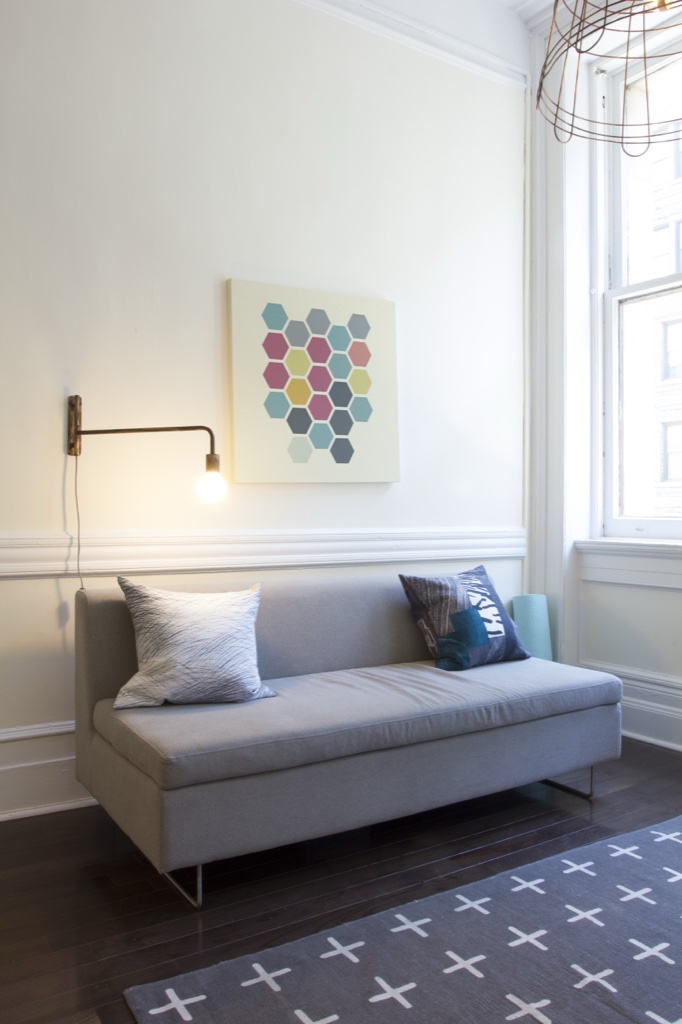
One more thing. Printing was always the point of variart: art that is uniquely yours, on your wall. Canvas prints are coming soon, and I’ll have more to say about that shortly.
Generative art (that is, using computer code to generate art) is not new. In fact pioneering algorists like Ben F. Laposky and Roman Verostko have been using code to generate printed pieces since the 1950s and 60s.
However, the code an algorist writes has traditionally been kept with the artist: just a tool in the process like a brush or palette knife. Additionally the viewer was left out until the very end, unable to see variations as they are created by the computer.
For years now I’ve wanted to share the uniqueness of computer-generated art with people, and allow them to bring it into their homes––bridging the gap between art and code, code and print. And in the spirit of the Open Source Software movement, make the process completely transparent.
When you view a piece on variart you are viewing just a single variation. If you don’t like what you see, click it to generate a new one. If you do like it consider buying it! It is a fleeting image that given to chance will probably never be seen the same way again. You will also see the piece’s source code. I urge you to take a look to get a glimpse behind the piece. (More details about the code that drives variart will be available soon.)